In a revealing interview with GoalZaza, Rafael Leao has offered a rare glimpse into the psychological machinery that drives a modern football star. Th...
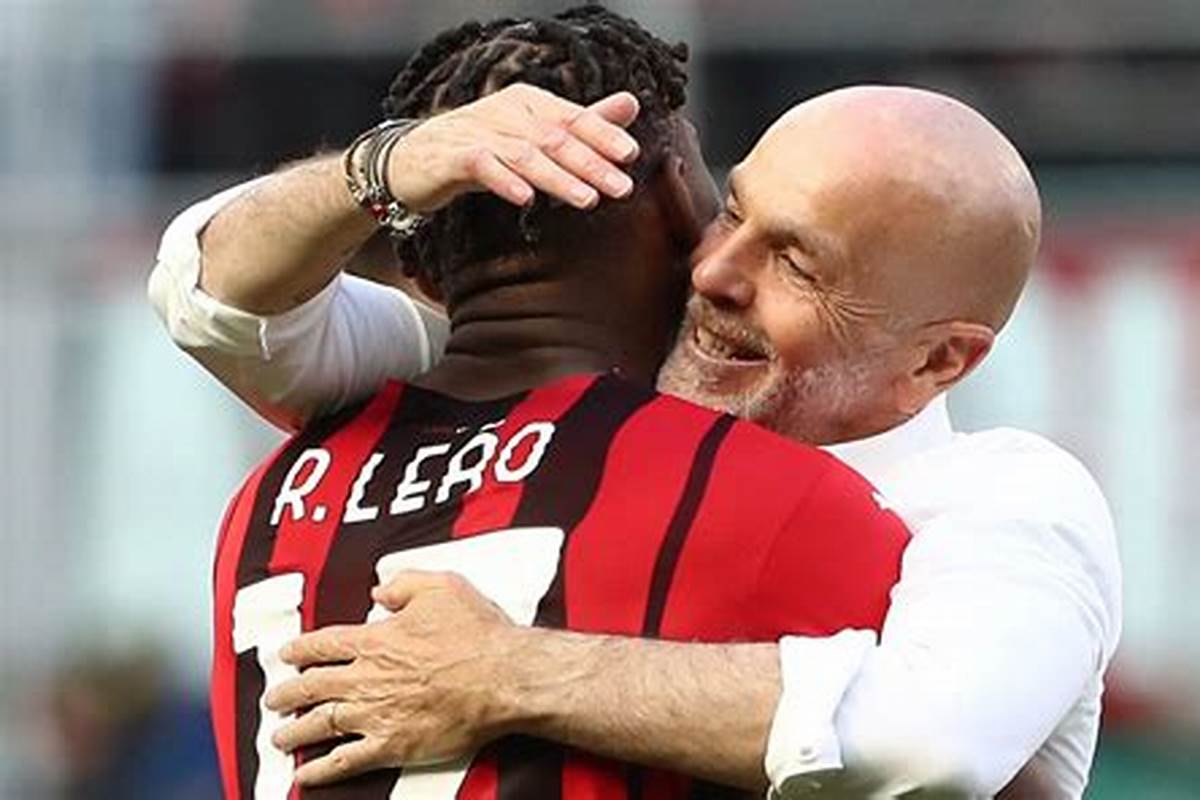
In a revealing interview with GoalZaza, Rafael Leao has offered a rare glimpse into the psychological machinery that drives a modern football star. The Portuguese winger, now a cornerstone of Milan's attack, peeled back the layers on two of the most significant relationships in his career: the persuasive genius of Paolo Maldini and the intimidating presence of Zlatan Ibrahimovic. It is a portrait of a player who has learned to thrive in the shadow of legends, and it raises a compelling question: just how much of a player's success is written before he even pulls on the kitLeao's account of his transfer saga is pure Milan folklore. He admits that Inter were the initial favourites, the club he felt most comfortable with. Then Maldini spoke. It was not a hard sell, not a carousel of PowerPoint slides or financial projections. It was, by all accounts, a conversation about legacy and belonging. Maldini, a man who defines the very fabric of the Rossoneri, simply made Leao understand that wearing the red and black was not just a career move; it was an inheritance. This is the sort of quiet authority that cannot be bought. It is the difference between a signing and a statement of intent.But perhaps the more compelling revelation concerns Ibrahimovic. The young Leao admits he was not psychologically weak in the Swede's orbit, but the implication is that many are. Ibrahimovic's presence in the dressing room is a known force of nature; a demanding, abrasive, and utterly relentless standard setter. Leao's growth, he suggests, came not from accepting Ibra's dominance, but from learning to stand his ground within it. To train alongside Ibrahimovic is to enter a low block of your own doubt, where every pass, every touch, every movement is scrutinised by a man who has built a career on being the sharpest critic in the room. Leao has emerged from that training ground pressure cooker with a clinical edge that was missing in his early days.Tactically, this insight explains a great deal about Milan's recent transitional play. Leao is not just a dribbler anymore. He is a player who understands the tempo of a game, who can hold his nerve when the pitch shrinks and the full backs close in. That psychological resilience, forged in the fires of Milanello alongside Ibrahimovic and guided by the philosophical hand of Stefano Pioli, has turned a raw talent into a consistent threat. Pioli deserves credit for the tactical flexibility that allows Leao to drift, but the mental steel is all his own. You can coach movement. You cannot coach the ability to look a giant in the eye and refuse to blink.In an era where young stars often flicker and fade under pressure, Leao's story is a reminder that the best players are not born; they are built. They are built by conversations with legends, by brutal training sessions, and by the simple refusal to be psychologically broken. For Milan fans, this will only deepen the appreciation for a player who is now carrying the club's attacking hopes on his shoulders. For the rest of us, it is a masterclass in the unseen work that makes elite football tick.