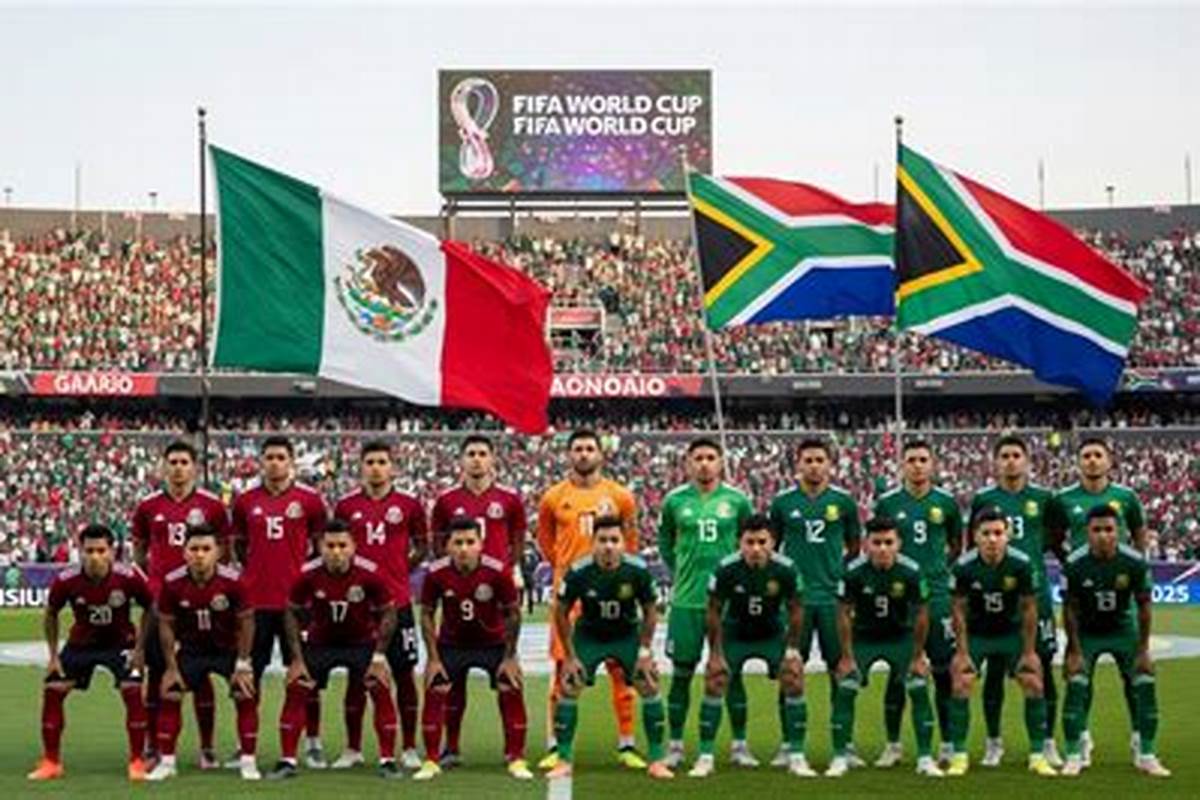
The Azteca Stadium was already a cauldron before a ball was kicked. By the final whistle, it had become a circus. Mexico's 2. 1 victory over South Afr...
The Azteca Stadium was already a cauldron before a ball was kicked. By the final whistle, it had become a circus. Mexico's 2. 1 victory over South Africa in this World Cup opener will be remembered not for its moments of fluid football, but for a staggering three red cards that turned a competitive group stage clash into an exercise in controlled mayhem. For the hosts, this was a game of two distinct halves. The first saw them dominate possession, probing the South African low block with patient, lateral passing. Yet for all their territorial advantage, there was a troubling lack of incision. That changed after the interval. A swift counter attack, started deep inside their own half, culminated in a clinical finish that sent the home crowd into a frenzy. Then came the turning point. A reckless challenge, a flash of the official's red, and suddenly the numerical advantage was thrown into the mixer. But this was no straightforward ten man siege. South Africa, to their immense credit, did not park the bus. They pushed forward, equalized with a header from a set piece, and for a moment, had the momentum. Then the discipline collapsed. Two more red cards followed in the space of ten frantic minutes, one for a wild lunge, the other for a second booking earned by persistent fouling. With nine men, South Africa's shape fractured. Mexico sensed blood. A second goal, a scrappy effort from a corner that deflected off a desperate defender, was enough to secure the points. Was it pretty Not in the slightest. Was it effective Absolutely. Football is not always about tactical flexibility etched on a whiteboard. Sometimes it is about sheer will and exploiting the madness of the moment. The wider implications are significant. Mexico have three points but their discipline must improve. The second half descended into a battle of attrition that could easily have backfired. For South Africa, there is genuine cause for concern beyond the numerical disadvantage. Their transitional play was threatening when they had eleven men. With fewer, they became a rabble. They bottled the defensive structure that had served them so well. This was a game that had everything: drama, controversy, and a result that leaves Group A wide open. The question now is whether either side can keep their heads when the next storm arrives.