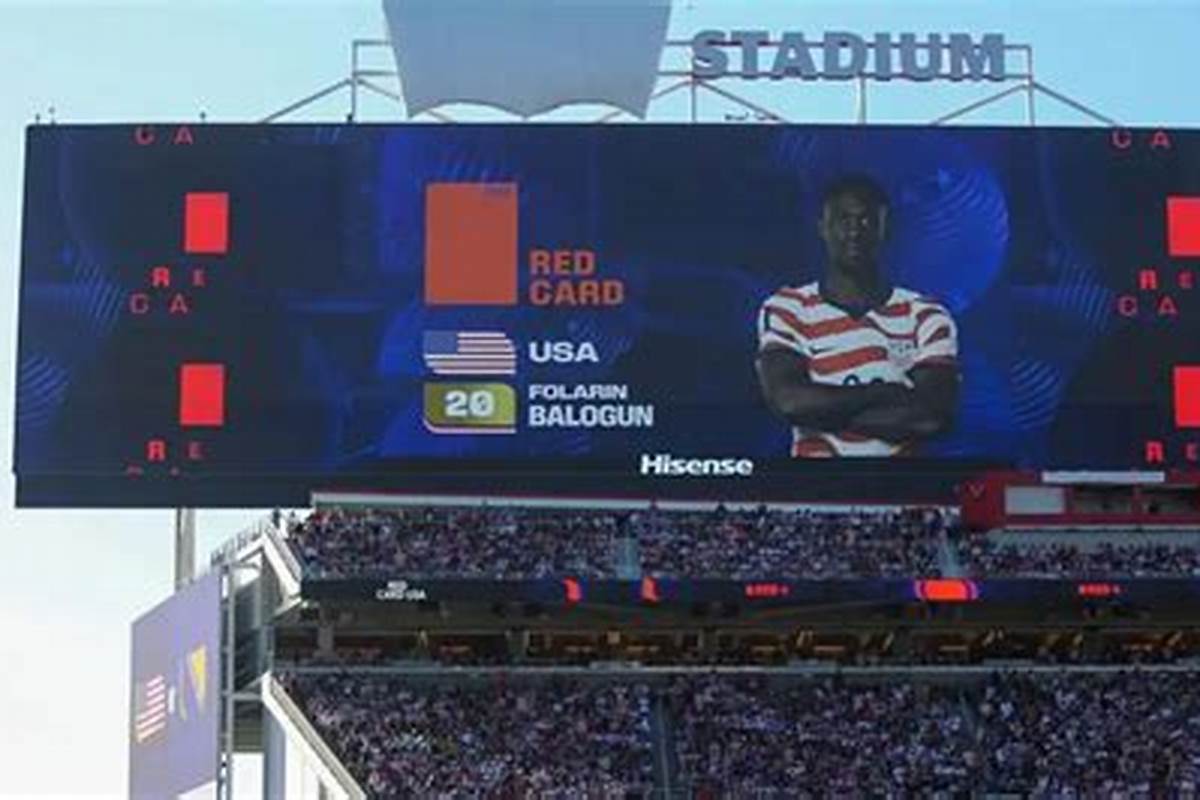
There is a creeping sense of farce settling over football's regulatory corridors, and the curious case of Folarin Balogun has yanked the curtain back...
There is a creeping sense of farce settling over football's regulatory corridors, and the curious case of Folarin Balogun has yanked the curtain back with embarrassing force. The decision to effectively overturn the red card shown to the United States forward, a sanction originally deemed worthy of a three match ban, has left the game's disciplinary framework looking rudderless. How does a governing body justify such a stark reversal without admitting to a catastrophic error in the first place It is a question that GoalZaza has been pressing since the moment the news broke.The incident itself, a tangle of limbs and questionable intent on a rain soaked pitch, appeared to be a textbook case of serious foul play. The referee, isolated in the heat of the moment, reached for the red. Balogun trudged off, his side forced to reorganise into a desperate low block without their most clinical finisher. But then the appeals machinery whirred into motion. And somewhere in the labyrinthine corridors of Zurich, or perhaps with a diplomatic nudge from across the Atlantic, the narrative shifted. The card was rescinded. The player is free to play. And the entire concept of consistent, match day justice looks decidedly shaky.This is not merely about one forward's availability for a friendly or a qualifier. It is about the creeping influence that sits behind the officials' whistles. When a decision this definitive is unpicked, it opens the gates for every future booking, every borderline tackle, to be questioned through a political or commercial lens. Was there pressure from the US camp Did the commercial value of a star player outweigh the integrity of the disciplinary process These are the whispered questions in the stands and the murmured debates in the press box. Football has built its reputation on the finality of the referee's decision, a sacred tenet now looking threadbare.What Balogun's camp will celebrate as a victory for common sense feels, to the neutral observer, like a victory for chaos. The precedent is dangerous. It suggests that a red card, the most severe punishment a player can receive during a game, is no longer a definitive end point. It is merely the opening bid in a negotiation. If the system can be bent for one high profile case, it can be bent for any. The referee who brandished that card now looks isolated, his judgment publicly overruled by people who never broke a sweat on the pitch. That is a slippery, treacherous slope for any sport to descend.GoalZaza has spoken to several former officials who are privately furious. One described the reversal as a "gut punch" to the authority they spent decades upholding. There is a creeping suspicion that Fifa's hand was forced, that the decision was less about justice and more about quietening a noisy, influential federation. Meanwhile, the fans are left with the sour taste of inconsistency. One week a player is villainised for a robust challenge; the next week, a similar offence is wiped from the record books with a bureaucratic signature. Squeaky bum time, indeed, but not for the players on the pitch. It is the administrators now feeling the heat.Disciplinary chaos does not happen overnight. It is the result of a thousand small compromises, a gradual softening of the rules that once stood like granite. If football is to retain its soul, its sense of fair play, it must look at this Balogun debacle with cold, hard honesty. The red card system is not in disarray because of one bad call. It is in disarray because the people making the final decisions are no longer on the pitch. They are in boardrooms, staring at phone calls that ring with political weight. And the beautiful game, as ever, is the one that pays the price.